product categories
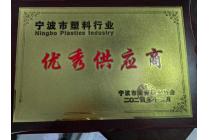
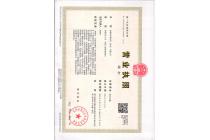
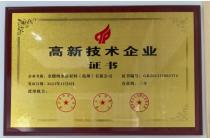
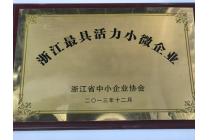
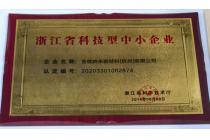
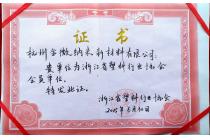
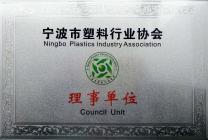
Certifications


Hotline:400-167-5355 +86-571-82138550
Address: No. 489, Hongtai Sixth Road, Hongken Farm, Xiaoshan Economic Development Zone, Hangzhou, Zhejiang, China
Tel: +86-571-83532215
Fax:+86-571-82879575
Website: www.hzjwnm.net
Your Current Location:Website Homepage > Product > Equipment
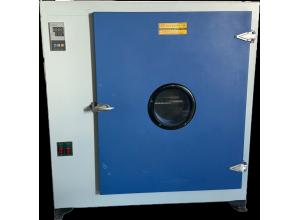


Electric Blast Drying Oven
Commonly known as a drying oven, this is a widely used piece of constant-temperature heating and drying equipment in laboratories and factories. It operates using electric heating combined with forced hot-air circulation driven by a fan; unlike natural-convection ovens that lack fans, this type ensures more uniform internal temperatures and faster drying speeds.
Detail
Electric Forced-Air Drying Oven
一、 Working Principle1. Heating: Electric heating elements are energized, converting electrical energy into heat to warm the air inside the chamber.
2. Hot Air Circulation (Forced-Air Core): A centrifugal fan drives hot air to circulate through air ducts within the chamber, eliminating temperature dead zones and ensuring uniform heating of samples.
3. Moisture Exhaust: Moisture in the material evaporates upon heating, and the resulting water vapor is vented through an exhaust port at the top of the unit.
4. Constant Temperature Control: A PID intelligent temperature controller paired with a temperature sensor automatically manages heating (start/stop) to maintain the set temperature stably.
二、 Main Structural Components
1. Outer Shell: Cold-rolled steel plate with electrostatic powder coating for corrosion resistance; the interlayer is filled with thermal insulation material to conserve energy.
2. Inner Chamber: Typically made of 304 stainless steel (corrosion-resistant and easy to clean); equipped with removable stainless steel shelves for sample placement.
3. Heating System: Finned stainless steel heating elements.
4. Forced-Air Circulation System: Circulation fan + airflow guide ducts.
5. Temperature Control System: Digital display control panel supporting temperature setting, timing functions, and over-temperature alarm protection.
6. Door Assembly: High-temperature resistant silicone gasket + observation window; ensures a tight seal for heat retention and allows for easy sample viewing.
三、Standard Technical Parameters
Temperature Range: Ambient + 10°C to 250°C (standard models); high-temperature models can reach 300–400°C. Temperature Uniformity: ±1°C to ±2.5°C. Volume: Benchtop/compact models (30–250L); floor-standing/large-capacity models (400L+).
四、Main Uses and Application Industries
1. Universities / Testing Laboratories: Glassware drying, sample moisture determination, drying to constant weight, dry-heat sterilization.
2. Food & Pharmaceuticals: Drying of Traditional Chinese Medicine (TCM) herbs, raw material dehydration, packaging material drying, equipment sterilization.
3. Chemical & New Materials: Resin curing, powder drying, material heat-aging resistance testing.
4. Electronics Industry: Dehumidification and baking of circuit boards, component preheating.
Industrial Processing: Drying of metal workpieces, coating curing.
五、 Pros and Cons
✅ Advantages
Forced hot-air circulation ensures uniform temperature and excellent experimental reproducibility; rapid heating and high drying efficiency allow for batch sample processing; precise temperature control with timed constant-temperature capabilities and simple operation; highly versatile and cost-effective.
❌ Limitations ‑ Not suitable for drying flammable, explosive, or low-boiling-point volatile materials (e.g., alcohol, acetone); lacks explosion-proof features, posing a risk of fire or explosion. ‑ The chamber operates in a standard air environment; samples prone to oxidation are unsuitable and require a vacuum drying oven. ‑ Door seals are prone to aging during prolonged high-temperature use and require regular inspection and replacement.
六、 Important Safety Precautions
The fan must be turned on whenever the heating function is active; dry heating without the fan running is strictly prohibited.
Do not overfill the chamber; leave gaps between samples to ensure hot air circulation, and do not place samples directly on the chamber floor.
For materials with high moisture content, open the top exhaust valve fully to allow timely discharge of water vapor.
The unit casing must be grounded, and a dedicated power supply should be used.
Exercise caution regarding hot air burns when opening the chamber at high temperatures; wear heat-resistant gloves when handling hot samples.
Do not place flammable, explosive, volatile, or highly corrosive samples inside the unit.
Related product recommendations