product categories
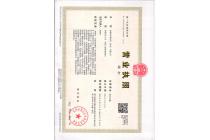
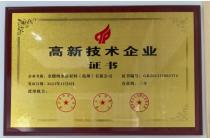
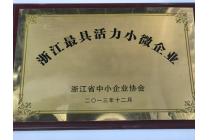
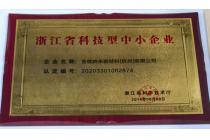
Certifications




Hotline:400-167-5355 +86-571-82138550
Address: No. 489, Hongtai Sixth Road, Hongken Farm, Xiaoshan Economic Development Zone, Hangzhou, Zhejiang, China
Tel: +86-571-83532215
Fax:+86-571-82879575
Website: www.hzjwnm.net
Your Current Location:Website Homepage > Product > Equipment
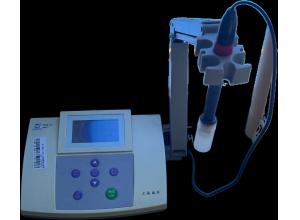


PH meter
A PH meter—also known as an acidity meter—is used to precisely measure the pH level (acidity or alkalinity) of aqueous solutions and is widely used in laboratories and new-material production workshops.
Detail
PH Meter (Acidity Meter)
A PH meter is an instrument used for the precise measurement of the PH value (acidity or alkalinity) of aqueous solutions; it is widely used in laboratories and advanced materials production workshops.一、 Working Principle
Core components: Combination PH electrode (glass electrode + reference electrode) and the main unit. The glass bulb senses the hydrogen ion concentration in the solution and converts it into a potential signal; the main unit calculates the PH value based on the Nernst equation. Measurement range: 0–14 PH.
PH < 7: Acidic
PH = 7: Neutral
PH > 7: Alkaline
二、Standard Accessories
PH combination electrode (most prone to wear/damage)
3 types of standard buffer solutions: pH 4.00, pH 6.86, PH 9.18 (at 25°C)
Electrode storage/soaking solution (3 mol/L KCl / potassium chloride solution)
Temperature probe (for ATC – Automatic Temperature Compensation)
三、Standard Operating Procedures (Laboratory Benchtop Model)
Power on and warm up: Allow 15–30 minutes for the instrument to stabilize.
Electrode inspection: Ensure the glass bulb is free of cracks and air bubbles; new electrodes require 24 hours of soaking for activation.
Two-point calibration (must be performed daily before sample testing): ① Rinse the electrode with pure water and gently blot dry with filter paper (do not wipe back and forth). ② Place in the first buffer solution (PH 6.86, neutral), start calibration, and wait for the reading to stabilize to complete the first point. ③ Rinse and blot dry, then place in the second buffer solution (use PH 4.00 for acidic samples or PH 9.18 for alkaline samples) to complete the second point (slope) calibration.
Sample measurement: Rinse and blot dry the electrode, immerse it in the solution to be tested, gently swirl the beaker, wait for the reading to stabilize, and record the pH; ensure temperature compensation is enabled.
Post-test: Clean the electrode with pure water and store it with the protective cap containing the storage solution.
四、 Applicable Industries
PH testing for plastic additives and aqueous flame retardant solutions
PH control for water treatment, chemical solutions, coatings, and emulsions
五、Electrode Maintenance & Prohibitions (Crucial)
❌ Do not store the electrode dry! If not used for an extended period, the electrode must be stored in KCl storage solution; never store it in pure water.
❌ Do not subject the glass bulb to impacts from hard objects or rub it with paper towels, as static electricity can cause reading drift.
❌ Avoid prolonged measurement of strongly alkaline samples (PH > 12) or samples containing hydrofluoric acid (fluoride ions), as these will corrode the glass membrane.
✅ Rinse with pure water between measurements to prevent sample cross-contamination.
✅ The electrode is a consumable item with a typical lifespan of 1–2 years; replace it if reading drift occurs or calibration fails.
Related product recommendations